Protocol - Alcohol - 30-Day Quantity and Frequency
Description
Measurements of respondent’s 30-day quantity and frequency of consumption of alcohol.
Specific Instructions
Respondents are asked the 30-day frequency question only if they answered "yes" to the Alcohol - Lifetime Use measure. Alcohol is defined as any type of alcohol (including coolers, beer, wine, champagne) and liquor (e.g., whiskey, rum, gin, vodka, scotch, or liqueurs).
Availability
This protocol is freely available; permission not required for use.
Protocol
The Working Group acknowledges that the following questions may gather sensitive information relating to the use of substances and/or illegal conduct. If the information is released it might be damaging to an individual’s employability, lead to social stigmatization, or other consequences.
For information on obtaining a Certificate of Confidentiality, which helps researchers protect the privacy of human research participants, please go to the National Human Genome Research Institute’s Institutional Review Board website.
Respondents are asked the following two questions: one regarding the frequency of consumption (number of days), and a second regarding the usual quantity of consumption (number of drinks) on drinking days.
1. Think specifically about the past 30 days, from [DATEFILL*], up to and including today. During the past 30 days, on how many days did you drink one or more drinks of an alcoholic beverage?
# OF DAYS: ____ [RANGE: 0 - 30]
Don’t Know / Refused
2. On the days that you drank during the past 30 days, how many drinks did you usually have each day? Count as a drink a can or bottle of beer; a wine cooler or a glass of wine, champagne, or sherry; a shot of liquor or a mixed drink or cocktail.
# OF DRINKS: ____ [RANGE: 1 - 90]
Don’t Know / Refused
* DATEFILL is the date 30 days prior to the date of the interview.
Notes to interviewer:
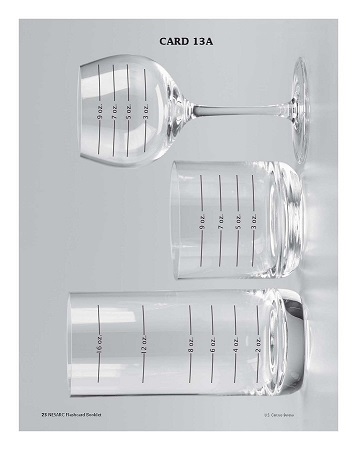
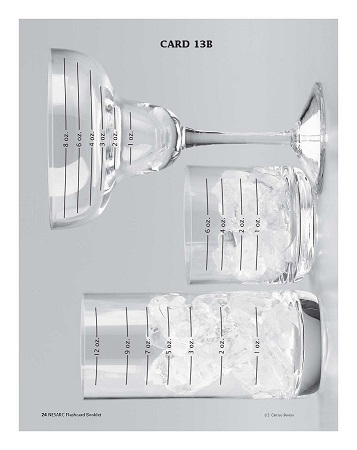
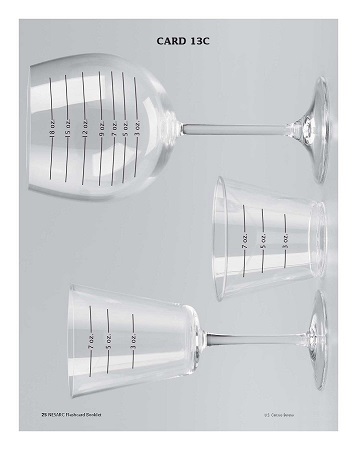
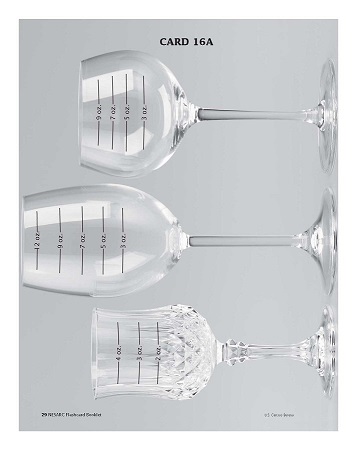
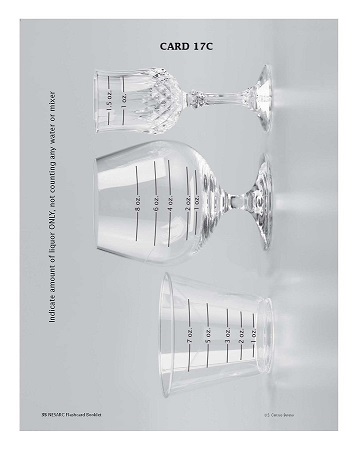
- Definition of a standard drink: 1 12oz bottle of beer, 1 glass 4oz non-fortified wine, 1 mixed drink with 1oz liquor.
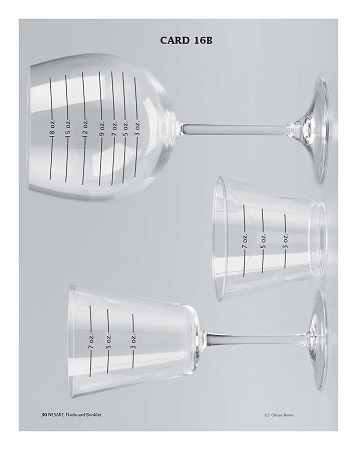
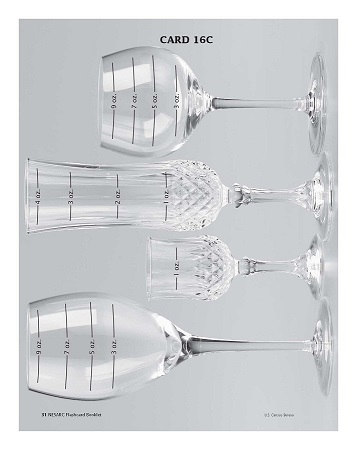
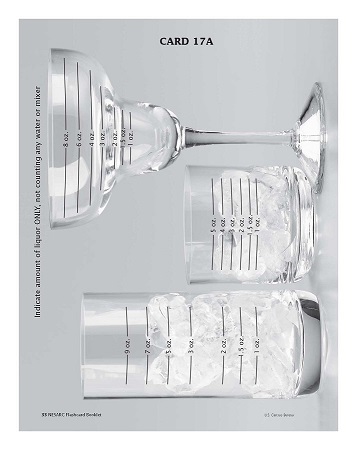
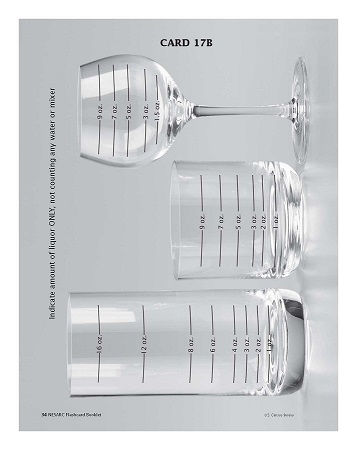
- If respondent needs a visual reference for the size of a drink, the flashcards from the Wave 1 National Epidemiologic Survey on Alcohol and Related Conditions (NESARC) study are provided below:
Personnel and Training Required
If an interviewer prepares the survey for self-administration, the interviewer must be trained and found competent to conduct personal interviews with individuals from the general population.
Equipment Needs
While the source instrument was developed for administration by computer, the PhenX Working Group acknowledges that these questions can be administered in a noncomputerized format.
Requirements
| Requirement Category | Required |
|---|---|
| Major equipment | No |
| Specialized training | No |
| Specialized requirements for biospecimen collection | No |
| Average time of greater than 15 minutes in an unaffected individual | No |
Mode of Administration
Self-administered questionnaire
Lifestage
Adult
Participants
≥18 years of age
Selection Rationale
The protocol from the National Survey on Drug Use and Health was selected because this survey is a primary source of information on the 30-day use of drugs, alcohol, and tobacco in the civilian, noninstitutionalized population of the United States. The study was initiated in 1971 and is currently conducted on an annual basis.
Language
Chinese, English, Other languages available at source
Standards
| Standard | Name | ID | Source |
|---|---|---|---|
| Logical Observation Identifiers Names and Codes (LOINC) | Alcohol 30D quantity frequency proto | 62547-5 | LOINC |
| Human Phenotype Ontology | Alcoholism | HP:0030955 | HPO |
| caDSR Form | PhenX PX030301 - Alcohol 30 Day Quantity And Frequency | 5807737 | caDSR Form |
Derived Variables
None
Process and Review
The Alcohol, Tobacco and Other Substances reviewed this protocol on May 08, 2025. Changes include:
-
Minor edits
- This affects the following fields: Process and Review;
Protocol Name from Source
National Survey on Drug Use and Health (NSDUH), 2015 & National Institute on Alcohol Abuse and Alcoholism (NIAAA) National Epidemiologic Survey on Alcohol and Related Conditions, Wave 1 (NESARC - WAVE 1)/Alcohol Use Disorder and Associated Disabilities Interview Schedule-IV (AUDADIS-IV)
Source
2008 National Survey on Drug Use and Health. CAI Specifications for Programming, English Version; November 2007. (questions AL06 and AL07).
National Institute on Alcohol Abuse and Alcoholism (NIAAA) National Epidemiologic Survey on Alcohol and Related Conditions. Wave 1 (NESARC - WAVE 1). Alcohol Use Disorder and Associated Disabilities Interview Schedule - Diagnostic and Statistical Manual of Mental Disorders. Fourth Edition Version (AUDADIS-IV). Flashcard Booklet, Flashcards 13A-C, 16A-C, and 17A-C.
Grant, B. F., Dawson, D. A., Stinson, F. S., Chou, P. S., Kay, W., & Pickering R. (2003). The Alcohol Use Disorder and Associated Disabilities Interview Schedule-IV (AUDADIS-IV): Reliability of alcohol consumption, tobacco use, family history of depression and psychiatric diagnostic modules in a general population sample. Drug and Alcohol Dependence, 71(1), 7-16.
General References
For information regarding alcohol consumption during the last 30 days among women who are pregnant, please refer to the Centers for Disease Control and Prevention (CDC) National Center on Birth Defects & Developmental Disabilities Fetal Alcohol Syndrome website and the CDC Behavioral Risk Factor Surveillance System website.
Protocol ID
30301
Variables
Export Variables| Variable Name | Variable ID | Variable Description | dbGaP Mapping | |
|---|---|---|---|---|
| PX030301_Alcohol_30Day_Frequency | ||||
| PX030301010000 | Think specifically about the past 30 days, more | Variable Mapping | ||
| PX030301_Alcohol_30Day_Quantity | ||||
| PX030301020000 | On the days that you drank during the past more | Variable Mapping | ||
Measure Name
Alcohol - 30-Day Quantity and Frequency
Release Date
February 6, 2009
Definition
Questions asking the respondent about quantity and frequency of alcohol consumption during the past 30 days.
Purpose
This measure can be used to assess the participant’s recent consumption of alcohol. The potential of recall bias can be reduced by assessing the respondent’s recent use.
Keywords
alcohol, exposure, alcohol use, alcohol use disorder, alcohol use, coolers, beer, wine, champagne, liquor, whiskey, rum, gin, vodka, scotch, liqueurs, sherry, cocktail, mixed drink, National Institute on Alcohol Abuse and Alcoholism, NIAAA, National Epidemiologic Survey on Alcohol and Related Conditions, NESARC, Alcohol Use Disorder and Associated Disabilities Interview Schedule, AUDADIS, Diagnostic and Statistical Manual of Mental Disorders, National Survey on Drug Use and Health, NSDUH, gerontology, aging, geriatrics
Measure Protocols
| Protocol ID | Protocol Name |
|---|---|
| 30301 | Alcohol - 30-Day Quantity and Frequency |
Publications
Motley, R. O., Jr., Williamson, E., McTernan, M., Beeler, S., and Salas-Wright, C. P. (2025) Perceived racism-based police violence and substance use among black and hispanic emerging adults: Evidence from a national sample Drug and Alcohol Dependence Reports. 2025 October; 17: 10. doi: 10.1016/j.dadr.2025.100388
Short, N. A., et al. (2025) Pre-trauma insomnia and posttraumatic alcohol and cannabis use in the AURORA observational cohort study of trauma survivors. Journal of Psychiatric Research. 2025 September; 189: 415-423. doi: 10.1016/j.jpsychires.2025.06.027
Jung, H. J., et al. (2025) Spacetop: A multimodal fMRI dataset unifying naturalistic processes with a rich array of experimental tasks. Scientific Data. 2025 August; 12(1): 1465. doi: 10.1038/s41597-025-05154-x
Harvey, A. G., et al. (2025) A randomized trial of adapted versus standard versions of the Transdiagnostic Intervention for Sleep and Circadian Dysfunction implemented via facilitation and delivered by community mental health providers: improving the fit of psychological treatments by adapting to context Implementation Science. 2025 July; 20(1): 32. doi: 10.1186/s13012-025-01440-9
Hinojosa, C. A., et al. (2025) The reciprocal relationship between posttraumatic stress disorder symptoms and alcohol use in a large multisite longitudinal sample stratified by sex: A random-intercept cross-lagged panel model. Alcohol, Clinical & Experimental Research. 2025 July; 49(7): 1504-1517. doi: 10.1111/acer.70092
Ally, D., et al. (2025) A pilot study of an online group-based Internal Family Systems intervention for comorbid posttraumatic stress disorder and substance use Frontiers in Psychiatry. 2025 March; 16: 1-10. doi: 10.3389/fpsyt.2025.1544435
Liu, X., Huo, L., Wang, F., Wang, T., Rong, W. C. and He, Y. (2025) Caffeine and Beetroot Juice Optimize 1,000-m Performance: Shapley Additive Explanations Analysis American Journal of Mens Health. 2025 March; 19(2): 13. doi: 10.1177/15579883251327907
Hinojosa, C. A., van Rooij, S. J. H., Fani, N., Ellis, R. A., Harnett, N. G., Lebois, L. A. M., Ely, T. D., Jovanovic, T., Murty, V. P., House, S. L., Beaudoin, F. L., An, X., Neylan, T. C., Clifford, G. D., Linnstaedt, S. D., Germine, L. T., Rauch, S. L., Haran, J. P., Storrow, A. B., Lewandowski, C., Musey, P. I., Jr., Hendry, P. L., Sheikh, S., Jones, C. W., Punches, B. E., Hudak, L. A., Pascual, J. L., Seamon, M. J., Harris, E., Pearson, C., Peak, D. A., Merchant, R. C., Domeier, R. M., Rathlev, N. K., O, B. J. 'Neil, Sergot, P., Bruce, S. E., Pizzagalli, D. A., Sheridan, J. F., Harte, S. E., Koenen, K. C., Kessler, R. C., McLean, S. A., Ressler, K. J. and Stevens, J. S. (2025) Reward Neurocircuitry Predicts Longitudinal Changes in Alcohol Use Following Trauma Exposure Biol Psychiatry Cogn Neurosci Neuroimaging. 2025 March; 10(3): 314-323. doi: 10.1016/j.bpsc.2024.09.015
Goodhines, P. A., Rathod, K., Schwarz, A. A., LaRowe, L. R. and Wedel, A. V. (2025) Sleep-Related Cannabis Expectancy Questionnaire (SR-CEQ): Factor Analysis Replication, Internal Reliability, and Construct Validity Journal of Psychoactive Drugs. 2025 January; 57(1): 84-98. doi: 10.1080/02791072.2024.2308803
Bart, G., et al. (2024) Exemplar Hospital Initiation Trial to Enhance Treatment Engagement (EXHIT ENTRE): protocol for CTN-0098 an open-label randomized comparative effectiveness trial of extended-release buprenorphine versus treatment as usual on post-hospital treatment engagement for hospitalized patients with opioid use disorder Addiction Science & Clinical Practice. 2024 December; 19(1): 11. doi: 10.1186/s13722-024-00510-5
Murley, W. D., et al. (2024) Anxiety connects social media use to food and alcohol disturbance and disordered eating when social support is low. Eating Behaviors. 2024 April; 53(7). doi: 10.1016/j.eatbeh.2024.101879
Garrison-Desany, H. M., et al. (2024) Post-traumatic stress and future substance use outcomes: leveraging antecedent factors to stratify risk Frontiers in Psychiatry. 2024 March; 15. doi: 10.3389/fpsyt.2024.1249382
El-Toukhy, S., et al. (2023) Decision Trade-Offs in Ecological Momentary Assessments and Digital Wearables Uptake: Protocol for a Discrete Choice Experiment JMIR Research Protocols. 2023 September; 12: e47567. doi: 10.2196/47567
Wang, X. Y., et al. (2023) Personalized Recommendation Method of “Carbohydrate-Protein” Supplement Based on Machine Learning and Enumeration Method IEEE Access. 2023 September; 11: 100573-100586. doi: 10.1109/ACCESS.2023.3314699
Callaway, C. A., et al. (2023) The Transdiagnostic Intervention for Sleep and Circadian Dysfunction (TranS-C) for serious mental illness in community mental health part 2: study protocol for a hybrid type 2 effectiveness-implementation cluster-randomized trial using train-the-trainer. Research Square. 2023 August; doi: 10.21203/rs.3.rs-2943787/v1
Sarfan, L. D., et al. (2023) The Transdiagnostic Intervention for Sleep and Circadian Dysfunction (TranS-C) for serious mental illness in community mental health part 1: study protocol for a hybrid type 2 effectiveness-implementation cluster-randomized trial. Trials. 2023 March; 24(1): 198. doi: 10.1186/s13063-023-07148-9
Garrison, K. A., et al. (2021) Drinking and Responses to Antidrinking Messages among Young Adults: An fMRI Study. Addiction Biology. 2021 January; 26(1): e12882. doi: 10.1111/adb.12882
Barbirou, M., et al. (2020) Western influenced lifestyle and Kv2.1 association as predicted biomarkers for Tunisian colorectal cancer. BMC Cancer. 2020 November; 20: Article Number: 1086. doi: 10.1186/s12885-020-07605-7
Rose, S. W., et al. (2019) Perceived racial/ethnic discrimination, marketing, and substance use among young adults. Journal of Ethnicity in Substance Abuse. 2019 October; 18(4): 558-577. doi: 10.1080/15332640.2018.1425949
Juan, J., et al. (2017) Joint Effects of PON1 Polymorphisms and Vegetable Intake on Ischemic Stroke: A Family-Based Case Control Study. Int J Mol Sci. 2017 December; 18(12): E2652. doi: 10.3390/ijms18122652
Tarleton, E. K., et al. (2017) Role of magnesium supplementation in the treatment of depression: A randomized clinical trial. PLoS One. 2017 June; 12(6): e0180067. doi: 10.1371/journal.pone.0180067
Kwok, R. K., et al. (2017) The GuLF STUDY: A Prospective Study of Persons Involved in the Deepwater Horizon Oil Spill Response and Clean-Up. Environ Health Perspect. 2017 April; 125(4): 570-578. doi: 10.1289/EHP715
Salmoirago-Blotcher, E., et al. (2017) Phone-delivered mindfulness training to promote medication adherence and reduce sexual risk behavior among persons living with HIV: Design and methods. Contemp Clin Trials. 2017 February; 53: 162-170. doi: 10.1016/j.cct.2016.12.016
Hall, M. A., Dudek, S. M., Goodloe, R., Crawford, D. C., Pendergrass, S. A., Peissig, P., Brilliant, M., McCarty, C. A., Ritchie, M. D. (2015) Environment-wide association study (EWAS) for type 2 diabetes in the Marshfield Personalized Medicine Research Project Biobank Pac Symp Biocomput. 2015 January; doi: 10.1142/9789814583220_0020
McCarty, C.A., Berg, R., Rottscheit, C.M., Waudby, C.J., Kitchner, T., Brilliant, M., Ritchie, M.D. (2014) Validation of PhenX measures in the personalized medicine research project for use in gene/environment studies. BMC Med Genomics. 2014 January; 7: 3. doi: 10.1186/1755-8794-7-3
FHIR
Rendered Form
Click "Export QuestionnaireResponse" after entering data.
Status
Waiting to load form...